

Volume 9, Issue 3 (7-2024)
CJHR 2024, 9(3): 127-134 |
Back to browse issues page



Download citation:
BibTeX | RIS | EndNote | Medlars | ProCite | Reference Manager | RefWorks
Send citation to:


BibTeX | RIS | EndNote | Medlars | ProCite | Reference Manager | RefWorks
Send citation to:
Delam H, Keshtkaran Z, Bargrizaneh F, Moghaddam S, Safari H, Sookhak F. Changing Patterns in Internet Addiction Among Students: Before and During COVID-19 Pandemic. CJHR 2024; 9 (3) :127-134
URL: http://cjhr.gums.ac.ir/article-1-375-en.html
URL: http://cjhr.gums.ac.ir/article-1-375-en.html
Hamed Delam1 
 , Zahra Keshtkaran2 , Farshad Bargrizaneh1 , Sara Moghaddam3 , Hamed Safari1 , Fatemeh Sookhak *4
, Zahra Keshtkaran2 , Farshad Bargrizaneh1 , Sara Moghaddam3 , Hamed Safari1 , Fatemeh Sookhak *4
1- Student Research Committee, Larestan University of Medical Sciences, Larestan, Iran.
2- Department of Nursing, School of Nursing and Midwifery, Community Based Psychiatric Care Research Center, Shiraz University of Medical Sciences, Shiraz, Iran.
3- Department of Nursing, Faculty of Nursing, Jahrom University of Medical Sciences, Jahrom, Iran.
4- Department of Nursing, School of Nursing, Larestan University of Medical Sciences, Larestan, Iran. ,Fatemeh.sookhak@gmail.com
2- Department of Nursing, School of Nursing and Midwifery, Community Based Psychiatric Care Research Center, Shiraz University of Medical Sciences, Shiraz, Iran.
3- Department of Nursing, Faculty of Nursing, Jahrom University of Medical Sciences, Jahrom, Iran.
4- Department of Nursing, School of Nursing, Larestan University of Medical Sciences, Larestan, Iran. ,
Full-Text [PDF 667 kb]
(310 Downloads)
| Abstract (HTML) (979 Views)
Full-Text: (386 Views)
Introduction
In recent decades, the world has undergone a significant transformation via widespread application of Internet technology. The 21st century, in particular, has seen a remarkable increase in Internet usage worldwide. This has resulted in a global shift towards digitalization, which has opened up new and improved avenues for education, communication, banking, businesses, health-seeking, and socializing. To put it simply, the Internet has completely changed the way we live our lives [1]. However, uncontrolled use of the Internet may lead to maladaptive behaviors such as Internet addiction, which is characterized by excessive or poorly controlled preoccupations, urges, or behaviors regarding computer use and Internet access that leads to impairment or distress [2, 3]. Studies have linked Internet addiction to other psychiatric disorders such as attention deficit and hyperactivity and alcohol abuse [4]. As of June 30, 2022, around 5.38 billion people worldwide were using the Internet, with the highest number of users in Asia [5]. However, excessive use of the Internet can lead to addiction, causing distress and impairments in daily life, as well as comorbid psychiatric disorders such as substance abuse, attention deficit and hyperactivity disorder (ADHD) and depression [4, 6]. The outbreak of COVID-19 began in Wuhan, China, in December 2019 and was reported as an outbreak by the WHO on January 30, 2020 [7, 8]. The COVID-19 pandemic has caused a rise in the adoption of digital technologies as a result of social distancing measures and lockdowns [9, 10]. Students have experienced substantial changes in their education, including virtual learning and online classes, particularly during the pandemic [11-13]. University students are the most avid Internet users, and the time these people take to use the Internet is about six times that of other people. These persons have easier admission to the Internet, which is why they are more prone to Internet addiction. Symptoms of Internet addiction include: a) Engaging in Internet activities b) Developing psychological dependence and withdrawal signs c) Failure to decrease Internet use d) Using the Internet to deal with negative situations and reduce stress [14]. Internet addiction causes social isolation in young people and negatively affects their social skills and interpersonal relationships, Young people with Internet addiction often have shyness and low social skills [15]. How people participate in online activities reflects a number of factors, including social background and relationships and psychological and cognitive performance [16]. A study conducted in Taiwan found that cases such as male gender, poor social support and mental health problems are risk factors for developing Internet addiction in young people [17].
Due to the upward trend in the number of cases of COVID-19, many people turn to the Internet to meet their social, economic and recreational needs. On the other hand, various studies around the world show the increasing number of Internet addiction cases, so the current research was planned to review changes in the state of Internet addiction, before and during the COVID-19 pandemic in 2021.
Materials and Methods
Study type and participants
This research was a cross-sectional study that was conducted on students learning in universities in southern Iran, southern Fars province (Larestan and Evaz cities) in October 2021. Inclusion criteria included: Student studying in one of the universities in the region and having satisfaction to contribute in the research. Exclusion criteria were failure to complete the questionnaire or incomplete answers to the questionnaire.
Questionaries
In the present study, a standard Kimberly Young questionnaire was used to measure the status of Internet addiction, the validity and reliability of which were confirmed [18]. This questionnaire contains of 20 items that are designed as a 5-point Likert (rarely: 1, sometimes: 2, often: 3, most of the time: 4 and always: 5). Score from 20 to 49 indicate typical Internet users, score from 50 to 79 represent Internet users at risk and score from 80 to 100 is indicative of Internet users with addictive behaviors. The internal validity of the questionnaire in Sally’s study was about 0.92 [19]. Cronbach’s α for 5 constituent factors in Widyanto and McMurran’s study was obtained from 0.54 to 0.81 [20]. Alavi et al. [21] in Iran investigated the validity and reliability of the questionnaire and the results of their study showed that the young Internet addiction questionnaire has favorable psychometric properties in the Iranian society. Content and convergent validity, retest validity (r=0.82), internal consistency (a=0.88) and split (r=0.72) were calculated, which were acceptable according to the results.
Procedure
Data collection form was designed online through Google’s capabilities called Google form. It was consisted of demographic characteristics (such as age, gender, marital status, place, university type and grade) and 20 questions from the Internet addiction questionnaire. First, there were questions related to the era before COVID-19 and then questions related to the era of COVID -19.
The link to the online questionnaire was provided to the study participants through websites and official social networks of the universities, and they were requested to answer all the items carefully. The sample size was determined according to the result of previous study showing prevalence of Internet Addiction=0.30 [22] and considering type 1 error=0.05, margin of error=0.05 and design effect=1.18, a total of 379 people were estimated. Study participants entered the study using the convenience sampling method and completed the online questionnaires after informed written consent. At all stages of the research, study participants were assured of confidentiality.
Statistical analysis
The normality of the data was confirmed using the histogram plot and the Shapiro test. Frequency (percentage) and Mean±SD were used to report descriptive statistics. Then, the paired t-test was used to compare the average score of Internet addiction before and during the pandemic. one-way analysis of variance (ANOVA) and chi-square test were also used to measure significant association in three levels of Internet addiction with demographic characteristics. Logistic regression model was used to measure the most important predictors of Internet addiction. Significance level was also considered 5%. Data were analyzed using SPSS software, version 25.
Results
A whole of 379 students participated in this research. The average age of the participants was 21.98±3.98 years. About 65% of the participants were women and 83.6% were single. Most of the participants lived in the city and more than 93% were studying for a bachelor’s degree (Table 1).

Table 2 shows the score and duration of Internet usage before and after the COVID-19 pandemic.
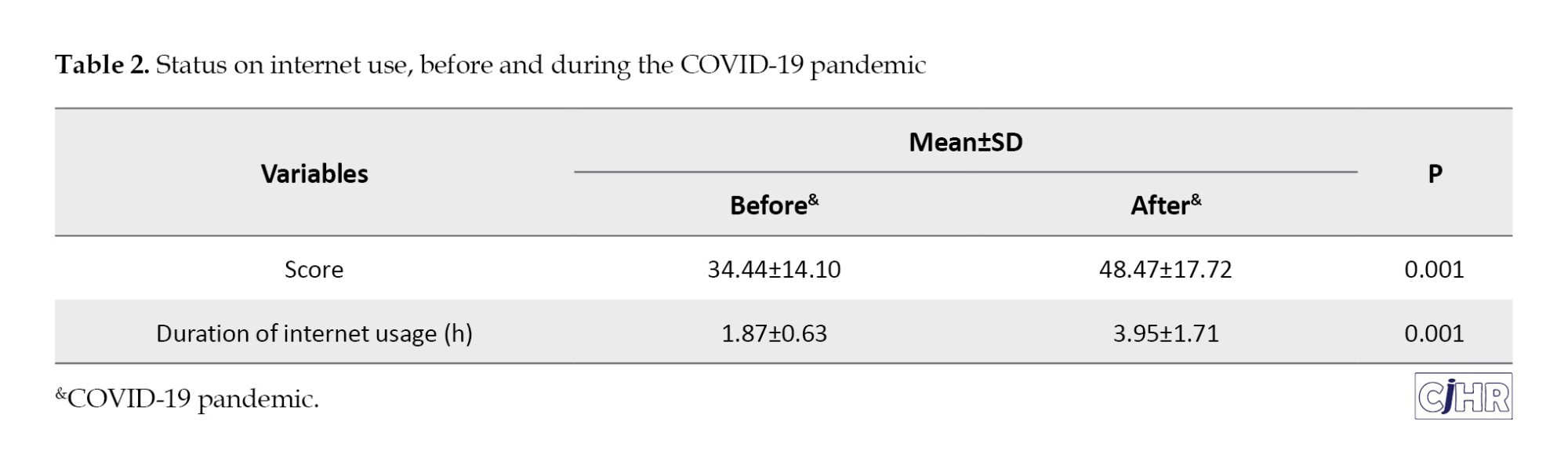
Analysis of the standard Internet addiction questionnaire showed that the average score of Internet addiction had increased from 34.44±14.10 to 48.47±17.72, which was significant (P<0.001). The duration of Internet use was also increased from 1.87±0.63 per day to 3.95±1.71 hours per day, which was significant (P<0.001).
Figure 1 shows the state of Internet addiction during and before Covid-19.
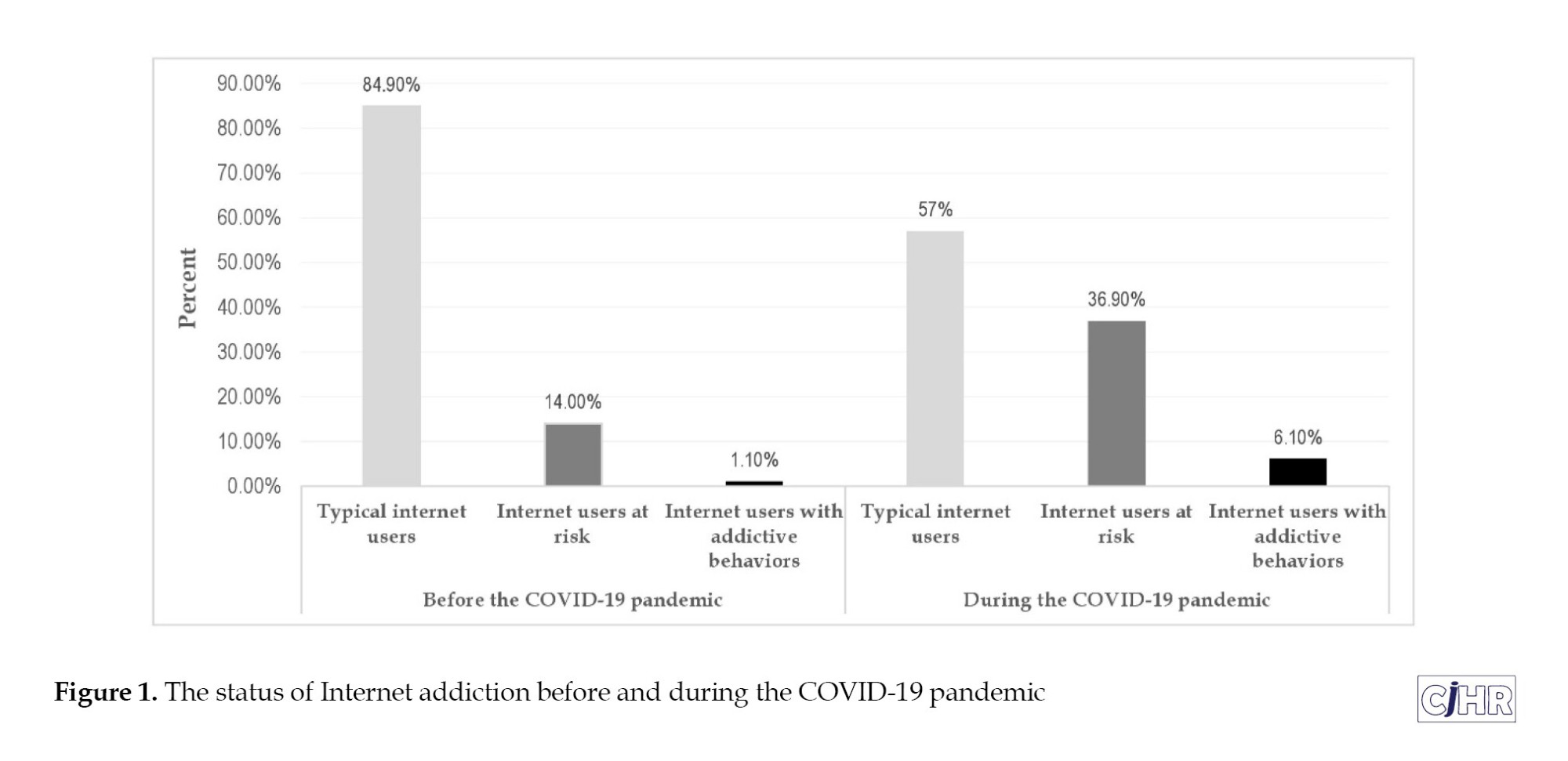
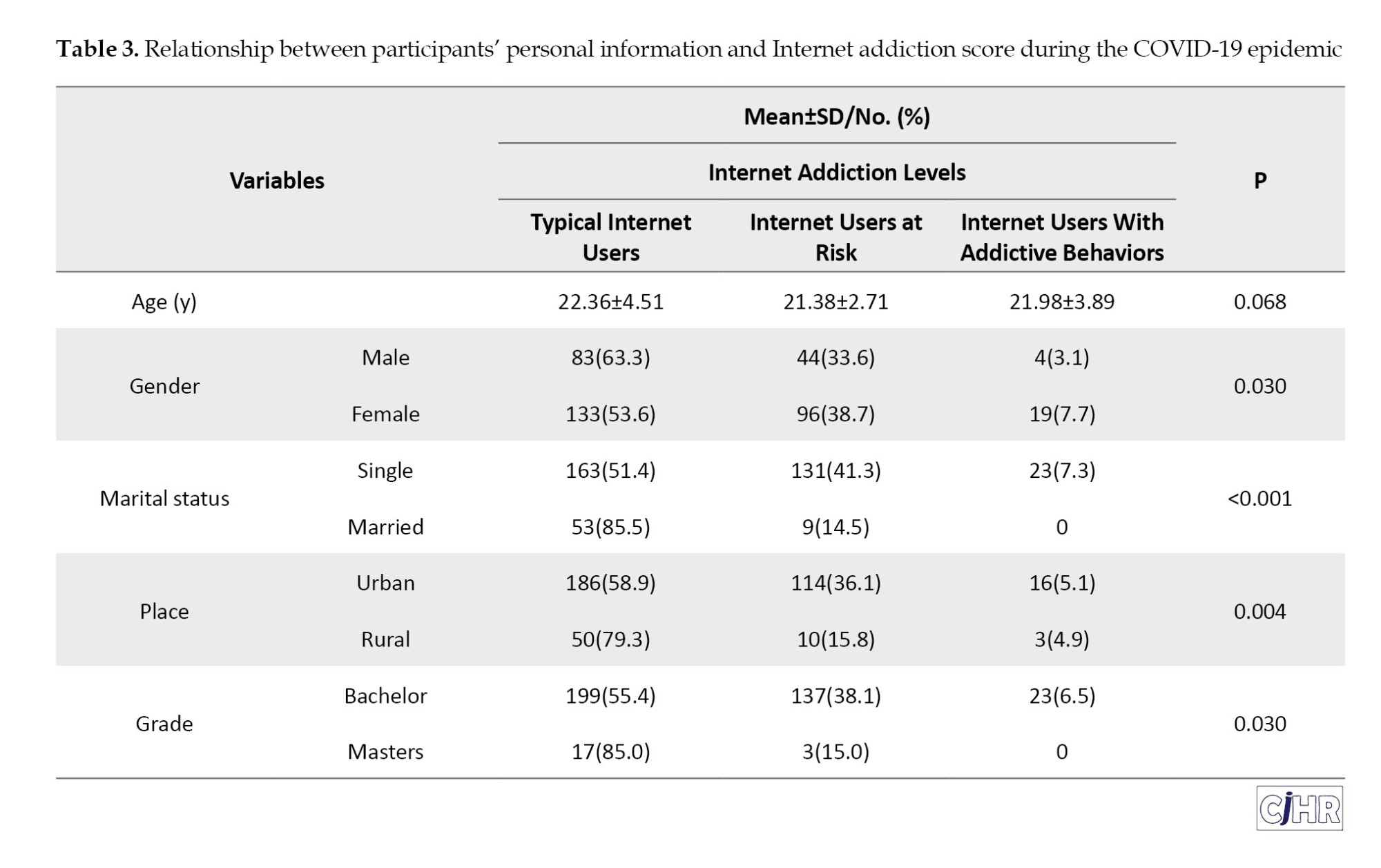
The results of this figure showed that before the emergence of the COVID-19 pandemic, about 1.10% (95% CI, 0.80%, 1.46%) of the people participating in the study were addicted to the Internet, while the prevalence of Internet addiction in the same people during the pandemic was about 6.10% (95% CI, 3.80%, 8.97%). In univariate analysis, female was more exposed to Internet addiction than male (P=0.030). Also, in terms of marital status, single people were significantly more likely to be addicted to the هnternet than married people (P<0.001). Living in the city and studying at the undergraduate level have also made people more exposed to the Internet addiction than living in the countryside and higher education level (P<0.05). There was no significant difference between levels of Internet addiction and age (P=0.068) (Table 3).
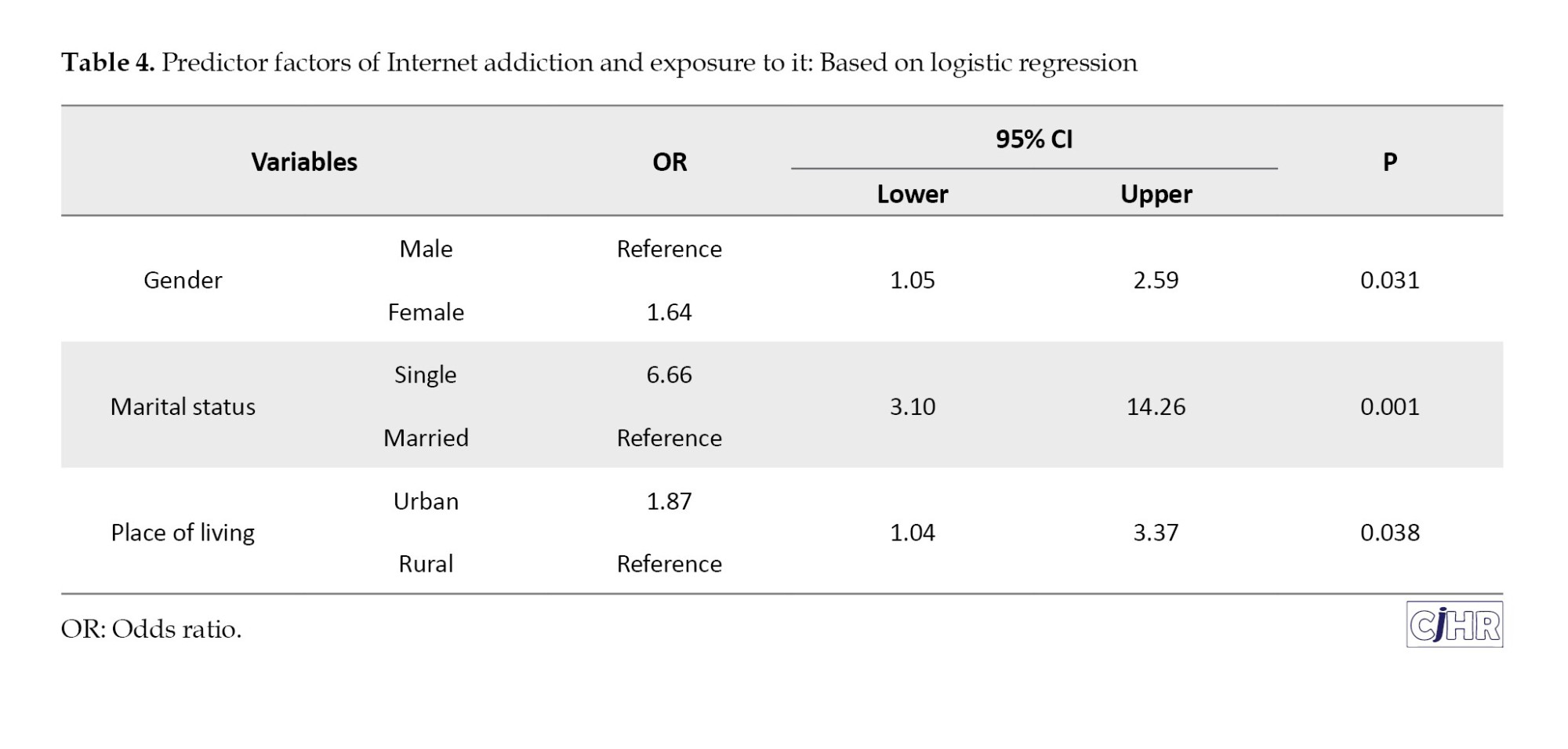
Logistic regression model with forward selection was used to measure the independent predictors of Internet addiction. The most important predictor variables in the present study included female gender, single marital status and living place. Women were about 64 percent more likely than men to become addicted to the Internet. Singles were also 6.6 times more likely to be addicted to the Internet than married people, and urban dwellers were 1.87 times more likely to be addicted to the Internet (P<0.05) (Table 4).
Discussion
This study aimed to assess changes in the status of Internet addiction before and during the 2021 COVID-19 pandemic. The results of our study showed that the average score of Internet addiction increased significantly during the COVID-19 pandemic compared to the period before it. In this regard, research studies and systematic reviews also showed that the prevalence of Internet addiction has increased during the COVID-19 pandemic [23, 24]. At the beginning of the pandemic, we predicted in a letter to the editor that the incidence of Internet addiction behaviors would increase that was demonstrated by the current study results [8]. The introduction of online education particularly in the universities during COVID-19 pandemic, may have boosted the use of the Internet for academic purposes [25]. Also, the home quarantine following the pandemic and following it, the increase in social distance caused people to turn to the Internet platform, including virtual space, to manage their life and social affairs, which can cause an increase in the incidence of Internet addiction behaviors [26, 27]. Despite the fact that using the Internet is usually useful for most people [28, 29], the increasing availability and high level of Internet penetration around the world can facilitate the occurrence of all kinds of addictive behaviors linked to the use of the Internet. In addition, many persons seem to show aggressive online behaviors that can be reinforced by numerous Internet technologies [30]. In the current research, it was shown that the mean score of Internet addiction during the pandemic period was significantly higher than before. A research conducted by Priego-Parra et al. [31] in 2020 in Mexico shown that extreme use of the Internet and receiving incorrect information about the disease and its spread among people increases anxiety and depression in people. Prakash et al. In 2020 in India found that the incidence of psychological problems, like Internet addiction, may rise throughout the COVID-19 crisis [32]. In a 2021 study by Tahir et al. [33], it was found that participants who reported symptoms related to COVID-19 had more Internet addiction and sleep disturbance compared to those who did not have COVID-19. Risk factors for increases in time spent on Internet use and severity of Internet addiction included having fewer social supporters, perceiving pressure and impact on mental health status due to COVID‐19, and being over‐engaged in playing videogames [34]. A study conducted by Lin [35] in Taiwan found that Internet addiction is relatively common among high school students during the COVID-19 pandemic. Compared to the group without internet addiction, it was found that the Internet addiction group is significantly older in terms of age and has higher neuroticism, higher impulsivity, more depression, higher ataxia, lower self-esteem and lower mental well-being.
In our study, it was shown that the most important predictors of Internet addiction are female gender, singles, and living in urban areas. In a study conducted by Sadat Ahmadi et al. In 2012 with the aim of investigating the prevalence of Internet addiction and its relationship with demographic characteristics among students of Allameh Tabatabai University, It was observed that the prevalence of Internet addiction is higher among girls than boys and also among undergraduate students than graduate students [36].
Another study in Turkey found that male gender is a predictor of Internet addiction [37]. Another study in China reported that the prevalence of Internet addiction was 8.1% and boy gender, good economic status and use of the Internet for entertainment were the most important predictors [38]. In a study conducted by Dong et al. [39] in China, it was shown that gender, age, depression and stress are as key vital factors in the incidence of Internet addiction in children and adolescents. In general, it can be said that three personal, social and Internet factors are involved in Internet addiction. Personal factors are related to individual characteristics such as introversion, inability to have sufficient communication skills and low self-efficacy. Internet factors also include more time to use the Internet, easier access to the Internet and superior Internet skills. Social factors include low family support and sociological problems. The important point is that the combination of social and personal factors can have a significant impact on Internet addiction. Internet addiction is one of the disorders that can increase dramatically due to the increasing prevalence of COVID-19 and home quarantine and changes in people’s lifestyles. Quarantine can also strengthen the causes of Internet addiction, especially social and personal factors, and have irreversible effects on people’s mental health [34].
The research also presented that widespread family support for vulnerable individuals during quarantine should be considered [34]. The Covid-19 pandemic has been brought under control and its era is over, but it seems that high-risk behaviors and people at risk for Internet addiction could be a big problem in future pandemics. The pandemic has also led to a decrease in face-to-face social interactions, resulting in increased reliance on social media and online entertainment platforms for social interaction [40, 41]. On the other hand, using the Internet is necessary for some professional and private activities of people, but cyberspace can cause dangerous behaviors like Internet addiction. Today, the phenomenon of Internet addiction has been considered by researchers [42].
Internet addiction has been increasing during the COVID-19 pandemic. Increasing the level of awareness of students, professors and relevant officials in universities about the issue of Internet addiction and its importance can be very effective in preventing and controlling this disorder. However, awareness alone is not enough and the application of educational programs, counseling and even effective interventions can be helpful in reducing the addictive behaviors of Internet addiction. A lot of Internet usage over time by people, especially the current young generation during the COVID-19 epidemic, seems to pose a probability of Internet addiction, in addition to other physical and psychological issues. Immediate action is necessary in terms of public awareness in monitoring the use of the Internet.
One of the main limitations of the current research was the distribution of forms, which means that the lack of physical access to students caused the questionnaires to be designed online and the link to be provided to students, this issue can affect the outcomes of the research. It seems that one of the main limitations of this study is recall bias. Another limitation of the present study was the use of available sampling method, which reduces the generalizability of the results.
Conclusion
The results of this study concluded that the level of Internet addiction among students has increased during COVID-19 pandemic. Gender, marital status, and place of living were the most important predictors of Internet addiction. Since students are at risk of Internet addiction, early identification and implementation of preventive and control programs are suggested for this group.
Ethical Considerations
Compliance with ethical guidelines
The present study was approved by the Ethics Committee of Larestan University of Medical Sciences (Code: IR.LARUMS.REC.1400.007).
Funding
This research was supported by the research project (No.: 1399-78), Funded by the Larestan University of Medical Sciences.
Authors' contributions
Conceptualization and supervision: Hamed Delam and Fatemeh Sookhak; Methodology: Hamed Delam; Investigation: Zahra Keshtkaran; Data curation: Farshad Bargrizaneh and Hamed Safari; Review & editing: Sara Moghaddam; Writing: All authors.
Conflict of interest
The authors declare no conflict of interest.
Acknowledgements
The authors would like to thank Larestan University of Medical Sciences for its financial support.
References
In recent decades, the world has undergone a significant transformation via widespread application of Internet technology. The 21st century, in particular, has seen a remarkable increase in Internet usage worldwide. This has resulted in a global shift towards digitalization, which has opened up new and improved avenues for education, communication, banking, businesses, health-seeking, and socializing. To put it simply, the Internet has completely changed the way we live our lives [1]. However, uncontrolled use of the Internet may lead to maladaptive behaviors such as Internet addiction, which is characterized by excessive or poorly controlled preoccupations, urges, or behaviors regarding computer use and Internet access that leads to impairment or distress [2, 3]. Studies have linked Internet addiction to other psychiatric disorders such as attention deficit and hyperactivity and alcohol abuse [4]. As of June 30, 2022, around 5.38 billion people worldwide were using the Internet, with the highest number of users in Asia [5]. However, excessive use of the Internet can lead to addiction, causing distress and impairments in daily life, as well as comorbid psychiatric disorders such as substance abuse, attention deficit and hyperactivity disorder (ADHD) and depression [4, 6]. The outbreak of COVID-19 began in Wuhan, China, in December 2019 and was reported as an outbreak by the WHO on January 30, 2020 [7, 8]. The COVID-19 pandemic has caused a rise in the adoption of digital technologies as a result of social distancing measures and lockdowns [9, 10]. Students have experienced substantial changes in their education, including virtual learning and online classes, particularly during the pandemic [11-13]. University students are the most avid Internet users, and the time these people take to use the Internet is about six times that of other people. These persons have easier admission to the Internet, which is why they are more prone to Internet addiction. Symptoms of Internet addiction include: a) Engaging in Internet activities b) Developing psychological dependence and withdrawal signs c) Failure to decrease Internet use d) Using the Internet to deal with negative situations and reduce stress [14]. Internet addiction causes social isolation in young people and negatively affects their social skills and interpersonal relationships, Young people with Internet addiction often have shyness and low social skills [15]. How people participate in online activities reflects a number of factors, including social background and relationships and psychological and cognitive performance [16]. A study conducted in Taiwan found that cases such as male gender, poor social support and mental health problems are risk factors for developing Internet addiction in young people [17].
Due to the upward trend in the number of cases of COVID-19, many people turn to the Internet to meet their social, economic and recreational needs. On the other hand, various studies around the world show the increasing number of Internet addiction cases, so the current research was planned to review changes in the state of Internet addiction, before and during the COVID-19 pandemic in 2021.
Materials and Methods
Study type and participants
This research was a cross-sectional study that was conducted on students learning in universities in southern Iran, southern Fars province (Larestan and Evaz cities) in October 2021. Inclusion criteria included: Student studying in one of the universities in the region and having satisfaction to contribute in the research. Exclusion criteria were failure to complete the questionnaire or incomplete answers to the questionnaire.
Questionaries
In the present study, a standard Kimberly Young questionnaire was used to measure the status of Internet addiction, the validity and reliability of which were confirmed [18]. This questionnaire contains of 20 items that are designed as a 5-point Likert (rarely: 1, sometimes: 2, often: 3, most of the time: 4 and always: 5). Score from 20 to 49 indicate typical Internet users, score from 50 to 79 represent Internet users at risk and score from 80 to 100 is indicative of Internet users with addictive behaviors. The internal validity of the questionnaire in Sally’s study was about 0.92 [19]. Cronbach’s α for 5 constituent factors in Widyanto and McMurran’s study was obtained from 0.54 to 0.81 [20]. Alavi et al. [21] in Iran investigated the validity and reliability of the questionnaire and the results of their study showed that the young Internet addiction questionnaire has favorable psychometric properties in the Iranian society. Content and convergent validity, retest validity (r=0.82), internal consistency (a=0.88) and split (r=0.72) were calculated, which were acceptable according to the results.
Procedure
Data collection form was designed online through Google’s capabilities called Google form. It was consisted of demographic characteristics (such as age, gender, marital status, place, university type and grade) and 20 questions from the Internet addiction questionnaire. First, there were questions related to the era before COVID-19 and then questions related to the era of COVID -19.
The link to the online questionnaire was provided to the study participants through websites and official social networks of the universities, and they were requested to answer all the items carefully. The sample size was determined according to the result of previous study showing prevalence of Internet Addiction=0.30 [22] and considering type 1 error=0.05, margin of error=0.05 and design effect=1.18, a total of 379 people were estimated. Study participants entered the study using the convenience sampling method and completed the online questionnaires after informed written consent. At all stages of the research, study participants were assured of confidentiality.
Statistical analysis
The normality of the data was confirmed using the histogram plot and the Shapiro test. Frequency (percentage) and Mean±SD were used to report descriptive statistics. Then, the paired t-test was used to compare the average score of Internet addiction before and during the pandemic. one-way analysis of variance (ANOVA) and chi-square test were also used to measure significant association in three levels of Internet addiction with demographic characteristics. Logistic regression model was used to measure the most important predictors of Internet addiction. Significance level was also considered 5%. Data were analyzed using SPSS software, version 25.
Results
A whole of 379 students participated in this research. The average age of the participants was 21.98±3.98 years. About 65% of the participants were women and 83.6% were single. Most of the participants lived in the city and more than 93% were studying for a bachelor’s degree (Table 1).
Table 2 shows the score and duration of Internet usage before and after the COVID-19 pandemic.
Analysis of the standard Internet addiction questionnaire showed that the average score of Internet addiction had increased from 34.44±14.10 to 48.47±17.72, which was significant (P<0.001). The duration of Internet use was also increased from 1.87±0.63 per day to 3.95±1.71 hours per day, which was significant (P<0.001).
Figure 1 shows the state of Internet addiction during and before Covid-19.
The results of this figure showed that before the emergence of the COVID-19 pandemic, about 1.10% (95% CI, 0.80%, 1.46%) of the people participating in the study were addicted to the Internet, while the prevalence of Internet addiction in the same people during the pandemic was about 6.10% (95% CI, 3.80%, 8.97%). In univariate analysis, female was more exposed to Internet addiction than male (P=0.030). Also, in terms of marital status, single people were significantly more likely to be addicted to the هnternet than married people (P<0.001). Living in the city and studying at the undergraduate level have also made people more exposed to the Internet addiction than living in the countryside and higher education level (P<0.05). There was no significant difference between levels of Internet addiction and age (P=0.068) (Table 3).
Logistic regression model with forward selection was used to measure the independent predictors of Internet addiction. The most important predictor variables in the present study included female gender, single marital status and living place. Women were about 64 percent more likely than men to become addicted to the Internet. Singles were also 6.6 times more likely to be addicted to the Internet than married people, and urban dwellers were 1.87 times more likely to be addicted to the Internet (P<0.05) (Table 4).
Discussion
This study aimed to assess changes in the status of Internet addiction before and during the 2021 COVID-19 pandemic. The results of our study showed that the average score of Internet addiction increased significantly during the COVID-19 pandemic compared to the period before it. In this regard, research studies and systematic reviews also showed that the prevalence of Internet addiction has increased during the COVID-19 pandemic [23, 24]. At the beginning of the pandemic, we predicted in a letter to the editor that the incidence of Internet addiction behaviors would increase that was demonstrated by the current study results [8]. The introduction of online education particularly in the universities during COVID-19 pandemic, may have boosted the use of the Internet for academic purposes [25]. Also, the home quarantine following the pandemic and following it, the increase in social distance caused people to turn to the Internet platform, including virtual space, to manage their life and social affairs, which can cause an increase in the incidence of Internet addiction behaviors [26, 27]. Despite the fact that using the Internet is usually useful for most people [28, 29], the increasing availability and high level of Internet penetration around the world can facilitate the occurrence of all kinds of addictive behaviors linked to the use of the Internet. In addition, many persons seem to show aggressive online behaviors that can be reinforced by numerous Internet technologies [30]. In the current research, it was shown that the mean score of Internet addiction during the pandemic period was significantly higher than before. A research conducted by Priego-Parra et al. [31] in 2020 in Mexico shown that extreme use of the Internet and receiving incorrect information about the disease and its spread among people increases anxiety and depression in people. Prakash et al. In 2020 in India found that the incidence of psychological problems, like Internet addiction, may rise throughout the COVID-19 crisis [32]. In a 2021 study by Tahir et al. [33], it was found that participants who reported symptoms related to COVID-19 had more Internet addiction and sleep disturbance compared to those who did not have COVID-19. Risk factors for increases in time spent on Internet use and severity of Internet addiction included having fewer social supporters, perceiving pressure and impact on mental health status due to COVID‐19, and being over‐engaged in playing videogames [34]. A study conducted by Lin [35] in Taiwan found that Internet addiction is relatively common among high school students during the COVID-19 pandemic. Compared to the group without internet addiction, it was found that the Internet addiction group is significantly older in terms of age and has higher neuroticism, higher impulsivity, more depression, higher ataxia, lower self-esteem and lower mental well-being.
In our study, it was shown that the most important predictors of Internet addiction are female gender, singles, and living in urban areas. In a study conducted by Sadat Ahmadi et al. In 2012 with the aim of investigating the prevalence of Internet addiction and its relationship with demographic characteristics among students of Allameh Tabatabai University, It was observed that the prevalence of Internet addiction is higher among girls than boys and also among undergraduate students than graduate students [36].
Another study in Turkey found that male gender is a predictor of Internet addiction [37]. Another study in China reported that the prevalence of Internet addiction was 8.1% and boy gender, good economic status and use of the Internet for entertainment were the most important predictors [38]. In a study conducted by Dong et al. [39] in China, it was shown that gender, age, depression and stress are as key vital factors in the incidence of Internet addiction in children and adolescents. In general, it can be said that three personal, social and Internet factors are involved in Internet addiction. Personal factors are related to individual characteristics such as introversion, inability to have sufficient communication skills and low self-efficacy. Internet factors also include more time to use the Internet, easier access to the Internet and superior Internet skills. Social factors include low family support and sociological problems. The important point is that the combination of social and personal factors can have a significant impact on Internet addiction. Internet addiction is one of the disorders that can increase dramatically due to the increasing prevalence of COVID-19 and home quarantine and changes in people’s lifestyles. Quarantine can also strengthen the causes of Internet addiction, especially social and personal factors, and have irreversible effects on people’s mental health [34].
The research also presented that widespread family support for vulnerable individuals during quarantine should be considered [34]. The Covid-19 pandemic has been brought under control and its era is over, but it seems that high-risk behaviors and people at risk for Internet addiction could be a big problem in future pandemics. The pandemic has also led to a decrease in face-to-face social interactions, resulting in increased reliance on social media and online entertainment platforms for social interaction [40, 41]. On the other hand, using the Internet is necessary for some professional and private activities of people, but cyberspace can cause dangerous behaviors like Internet addiction. Today, the phenomenon of Internet addiction has been considered by researchers [42].
Internet addiction has been increasing during the COVID-19 pandemic. Increasing the level of awareness of students, professors and relevant officials in universities about the issue of Internet addiction and its importance can be very effective in preventing and controlling this disorder. However, awareness alone is not enough and the application of educational programs, counseling and even effective interventions can be helpful in reducing the addictive behaviors of Internet addiction. A lot of Internet usage over time by people, especially the current young generation during the COVID-19 epidemic, seems to pose a probability of Internet addiction, in addition to other physical and psychological issues. Immediate action is necessary in terms of public awareness in monitoring the use of the Internet.
One of the main limitations of the current research was the distribution of forms, which means that the lack of physical access to students caused the questionnaires to be designed online and the link to be provided to students, this issue can affect the outcomes of the research. It seems that one of the main limitations of this study is recall bias. Another limitation of the present study was the use of available sampling method, which reduces the generalizability of the results.
Conclusion
The results of this study concluded that the level of Internet addiction among students has increased during COVID-19 pandemic. Gender, marital status, and place of living were the most important predictors of Internet addiction. Since students are at risk of Internet addiction, early identification and implementation of preventive and control programs are suggested for this group.
Ethical Considerations
Compliance with ethical guidelines
The present study was approved by the Ethics Committee of Larestan University of Medical Sciences (Code: IR.LARUMS.REC.1400.007).
Funding
This research was supported by the research project (No.: 1399-78), Funded by the Larestan University of Medical Sciences.
Authors' contributions
Conceptualization and supervision: Hamed Delam and Fatemeh Sookhak; Methodology: Hamed Delam; Investigation: Zahra Keshtkaran; Data curation: Farshad Bargrizaneh and Hamed Safari; Review & editing: Sara Moghaddam; Writing: All authors.
Conflict of interest
The authors declare no conflict of interest.
Acknowledgements
The authors would like to thank Larestan University of Medical Sciences for its financial support.
References
- Chaudhari B, Menon P, Saldanha D, Tewari A, Bhattacharya L. Internet addiction and its determinants among medical students. Ind Psychiatry J. 2015; 24(2):158-62. [DOI:10.4103/0972-6748.181729] [PMID] [PMCID]
- Kuss DJ, Lopez-Fernandez O. Internet addiction and problematic Internet use: A systematic review of clinical research. World J Psychiatry. 2016; 6(1):143-76. [DOI:10.5498/wjp.v6.i1.143] [PMID] [PMCID]
- Shaw M, Black DW. Internet addiction: Definition, assessment, epidemiology and clinical managemen. CNS Drugs. 2008; 22(5):353-65. [DOI:10.2165/00023210-200822050-00001] [PMID]
- Ho RC, Zhang MW, Tsang TY, Toh AH, Pan F, Lu Y, et al. The association between internet addiction and psychiatric co-morbidity: A meta-analysis. BMC Psychiatry. 2014; 14:183. [DOI:10.1186/1471-244X-14-183] [PMID] [PMCID]
- Statistica. World Internet usage and population statistic [Internet]. 2022 [Updated 30 June 2022]. Availble from: [Link]
- Adelantado-Renau M, Moliner-Urdiales D, Cavero-Redondo I, Beltran-Valls MR, Martínez-Vizcaíno V, Álvarez-Bueno C. Association between screen media use and academic performance among children and adolescents: A systematic review and meta-analysis. JAMA Pediatr. 2019; 173(11):1058-67. [DOI:10.1001/jamapediatrics.2019.3176] [PMID] [PMCID]
- Delam H, Moghaddam S, Zare R. Efficacy and safety of COVID-19 vaccines in different variants and doses: A systematic review. Int J Epidemiol Res. 2022; 9(4):184-95. [DOI:10.34172/EHSJ.2022.33]
- Eidi A, Delam H. Internet addiction is likely to increase in home quarantine caused by coronavirus disease 2019 (COVID 19). J Health Sci Surveillance Syst. 2020; 8(3):142-3. [DOI:10.30476/jhsss.2020.87015.1104]
- Seyed Hashemi SG, Hosseinnezhad S, Dini S, Griffiths MD, Lin CY, Pakpour AH. The mediating effect of the cyberchondria and anxiety sensitivity in the association between problematic internet use, metacognition beliefs, and fear of COVID-19 among Iranian online population. Heliyon. 2020; 6(10):e05135. [DOI:10.1016/j.heliyon.2020.e05135] [PMID] [PMCID]
- Lin CY, Broström A, Griffiths MD, Pakpour AH. Investigating mediated effects of fear of COVID-19 and COVID-19 misunderstanding in the association between problematic social media use, psychological distress, and insomnia. Internet Interv. 2020; 21:100345. [DOI:10.1016/j.invent.2020.100345] [PMID] [PMCID]
- Verma A, Verma S, Garg P, Godara R. Online teaching during COVID-19: Perception of medical undergraduate students. Indian J Surg. 2020; 82(3):299-300. [DOI:10.1007/s12262-020-02487-2] [PMID] [PMCID]
- Meo SA, Abukhalaf AA, Alomar AA, Sattar K, Klonoff DC. COVID-19 pandemic: Impact of quarantine on medical students’ mental wellbeing and learning behaviors. Pakistan J Med Sci. 2020; 36(COVID19-S4):S43. [DOI:10.12669/pjms.36.COVID19-S4.2809]
- Sharma R, Bansal P, Chhabra M, Bansal C, Arora M. Severe acute respiratory syndrome coronavirus-2-associated perceived stress and anxiety among indian medical students: A cross-sectional study. Asian J Soc Health Behav. 2021; 4(3):98-104. [DOI:10.4103/shb.shb_9_21]
- Lu WH, Lee KH, Ko CH, Hsiao RC, Hu HF, Yen CF. Relationship between borderline personality symptoms and Internet addiction: The mediating effects of mental health problems. J Behav Addict. 2017; 6(3):434-41.[DOI:10.1556/2006.6.2017.053] [PMID] [PMCID]
- Tran BX, Huong LT, Hinh ND, Nguyen LH, Le BN, Nong VM, et al. A study on the influence of internet addiction and online interpersonal influences on health-related quality of life in young Vietnamese. BMC Public Health. 2017; 17(1):138. [DOI:10.1186/s12889-016-3983-z] [PMID] [PMCID]
- ElSalhy M, Miyazaki T, Noda Y, Nakajima S, Nakayama H, Mihara S, et al. Relationships between Internet addiction and clinicodemographic and behavioral factors. Neuropsychiatr Dis Treat. 2019; 15:739-52. [DOI:10.2147/NDT.S193357] [PMID] [PMCID]
- Tsai HF, Cheng SH, Yeh TL, Shih CC, Chen KC, Yang YC, et al. The risk factors of Internet addiction-a survey of university freshmen. Psychiatry Res. 2009; 167(3):294-9. [DOI:10.1016/j.psychres.2008.01.015] [PMID]
- Young KS. Internet addiction: The emergence of a new clinical disorder. Cyberpsychol Behav. 2009; 1(3). [DOI:10.1089/cpb.1998.1.]
- Sally LPM. Prediction of internet addiction for undergraduates in Hong Kong [BA thesis]. Hong Kong: Baptist University; 2006. [Link]
- Widyanto L, McMurran M. The psychometric properties of the internet addiction test. Cyberpsychol Behav. 2004; 7(4):443-50. [DOI:10.1089/cpb.2004.7.443] [PMID]
- Alavi S. [Psychometric properties of Young internet addiction test (Persian)]. Int J Behav Sci. 2010; 4(3):183-9. [Link]
- Zhang MW, Lim RB, Lee C, Ho RC. Prevalence of internet addiction in medical students: A meta-analysis. Acad Psychiatry. 2018; 42(1):88-93. [DOI:10.1007/s40596-017-0794-1] [PMID]
- Putri A, Setiawati Y, Shieh YT, Lin SH. High-risk internet addiction in adolescents during pandemic COVID-19 and parent’s role. J Berkala Epidemiol. 2022; 10(1):11-20. [DOI:10.20473/jbe.V10I12022.11-20]
- Masaeli N, Farhadi H. Prevalence of Internet-based addictive behaviors during COVID-19 pandemic: A systematic review. J Addict Dis. 2021; 39(4):468-88. [DOI:10.1080/10550887.2021.1895962] [PMID]
- Hossain MT, Nishu NA, Jahan N, Saadia H, Ela MZ, Moshrur-Ul-Alam Q, et al. Challenges of participating in online education/distance learning amidst the COVID-19 pandemic in Bangladesh: The response from students and teachers. In: Handbook of research on Asian perspectives of the educational impact of covid-19. Pennsylvania: IGI Global; 2022. [Link]
- Delam H, Eidi A. WhatsApp messenger role in coronavirus disease 2019 (COVID 19) pandemic. J Health Sci Surveillance Syst. 2020; 8(4):183-4. [DOI:10.30476/jhsss.2020.87202.1107]
- Delam H, Eidi A, Soufi O, Bazrafshan MR. Anxiety status of Instagram users during coronavirus disease in Iran in 2020: A cross-sectional study. Int J Epidemiol Res. 2021; 8(3):105-8. [DOI:10.34172/ijer.2021.20]
- Howard CJ, Wilding R, Guest D. Light video game play is associated with enhanced visual processing of rapid serial visual presentation targets. Perception. 2017; 46(2):161-77. [DOI:10.1177/0301006616672579] [PMID]
- Wiederhold BK. Beyond direct benefits: Indirect health benefits of social media use. Cyberpsychol Behav Soc Netw. 2017; 20(1):1-2. [PMID]
- Aboujaoude E. The Internet’s effect on personality traits: An important casualty of the “Internet addiction” paradigm. J Behav Addict. 2017; 6(1):1-4. [DOI:10.1556/2006.6.2017.009] [PMID] [PMCID]
- Priego-Parra BA, Triana-Romero A, Pinto-Gálvez SM, Ramos CD, Salas-Nolasco O, Reyes MM, et al. Anxiety, depression, attitudes, and internet addiction during the initial phase of the 2019 coronavirus disease (COVID-19) epidemic: A cross-sectional study in Mexico. medRxiv. 2020. [Link]
- Prakash S, Yadav JS, Singh T. An online cross-sectional study to assess the prevalence of Internet Addiction among people staying at their home during Lockdown due to COVID-19. Int J Indian Psychol. 2020; 8(3):424-32. [Link]
- Tahir MJ, Malik NI, Ullah I, Khan HR, Perveen S, Ramalho R, et al. Internet addiction and sleep quality among medical students during the COVID-19 pandemic: A multinational cross-sectional survey. Plos One. 2021; 16(11):e0259594. [DOI:10.1371/journal.pone.0259594] [PMID] [PMCID]
- Li YY, Sun Y, Meng SQ, Bao YP, Cheng JL, Chang XW, et al. Internet addiction increases in the general population during COVID-19: Evidence from China. Am J Addict. 2021; 30(4):389-97. [DOI:10.1111/ajad.13156] [PMID] [PMCID]
- Lin MP. Prevalence of internet addiction during the COVID-19 outbreak and its risk factors among junior high school students in Taiwan. Int J Environ Res Public Health. 2020; 17(22):8547. [DOI:10.3390/ijerph17228547] [PMID] [PMCID]
- Sadat Ahmadi H, Muhammadi Zade F, Ma’soumbeigi M, Sohrabi F. [Prevalence of internet addiction and its relationship with demographic characteristics among Allameh Tabataba’i University students (Persian)]. Educ Psychol. 2012; 8(25):20-30. [Link]
- Canan F, Ataoglu A, Ozcetin A, Icmeli C. The association between Internet addiction and dissociation among Turkish college students. Compr Psychiatry. 2012; 53(5):422-6. [DOI:10.1016/j.comppsych.2011.08.006] [PMID]
- Cao H, Sun Y, Wan Y, Hao J, Tao F. Problematic internet use in Chinese adolescents and its relation to psychosomatic symptoms and life satisfaction. BMC Public Health. 2011; 11:802. [DOI:10.1186/1471-2458-11-802] [PMID] [PMCID]
- Dong H, Yang F, Lu X, Hao W. Internet addiction and related psychological factors among children and adolescents in china during the coronavirus disease 2019 (COVID-19) epidemic. Front Psychiatry. 2020; 11:00751. [DOI:10.3389/fpsyt.2020.00751] [PMID] [PMCID]
- Dixit A, Marthoenis M, Arafat SMY, Sharma P, Kar SK. Binge watching behavior during COVID 19 pandemic: A cross-sectional, cross-national online survey. Psychiatry Res. 2020; 289:113089. [DOI:10.1016/j.psychres.2020.113089] [PMCID]
- Oluwole LO, Obadeji A, Dada MU. Surfing over masked distress: Internet addiction and psychological well-being among a population of medical students. Asian J Soc Health Behav. 2021; 4(2):56-61. [DOI:10.4103/shb.shb_76_20]
- Černja I, Vejmelka L, Rajter M. Internet addiction test: Croatian preliminary study. BMC Psychiatry. 2019; 19(1):388.[DOI:10.1186/s12888-019-2366-2] [PMID] [PMCID]
Article Type: Original Contributions |
Subject:
Public Health
Received: 2024/04/9 | Accepted: 2024/05/27 | Published: 2024/07/1
Received: 2024/04/9 | Accepted: 2024/05/27 | Published: 2024/07/1
Send email to the article author
| Rights and permissions | |
 |
This work is licensed under a Creative Commons Attribution-NonCommercial 4.0 International License. |

Copyright © The Author(s);
This is an open access article distributed under the terms of the Creative Commons Attribution License (CC-By-NC), which permits use, distribution, and reproduction in any medium, provided the original work is properly cited and is not used for commercial purposes.
Contact Information